
Clock Oil: What to Use and Where It Goes
Household oil is the most common cause of avoidable clock damage we see.
Never use these
WD-40, 3-in-1, sewing machine oil, motor oil and any aerosol lubricant. They gum, migrate across plates and attract dust. Cleaning up an over-oiled movement often costs more than the original service.
What professionals use
Synthetic clock oils such as Moebius or Etsyntha, chosen by viscosity for the load. Heavier grease for mainsprings and high-load teeth, thin oil for balance and escapement pivots.
Where oil goes
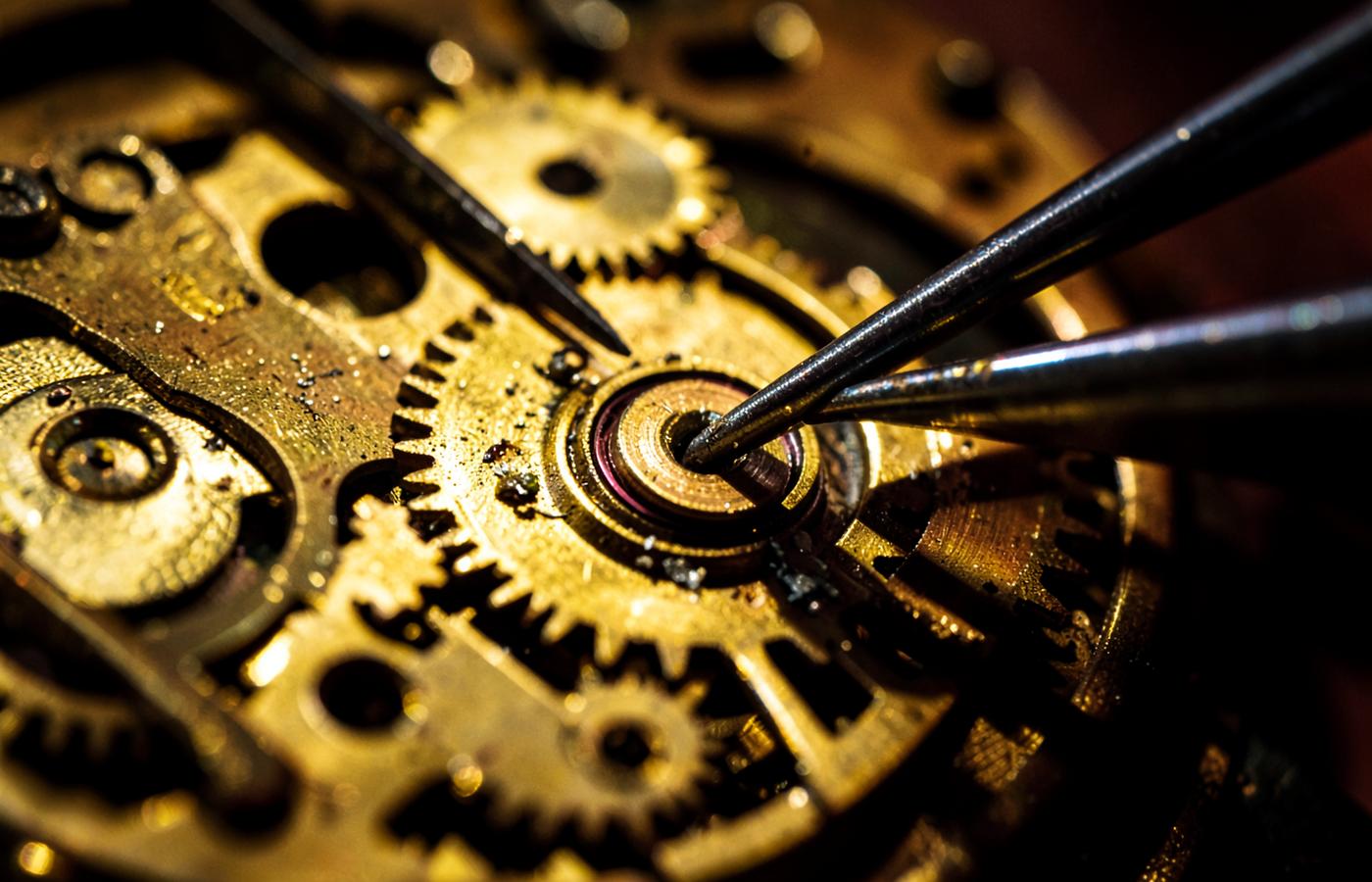
Only at load-bearing pivots and specific escapement contact points — never on wheel teeth, never on the pendulum suspension. A clock that has been oiled without cleaning is still a dirty clock.
When to call a clockmaker
If a clock has stopped, is losing more than a few minutes a week, sounds wrong when it strikes, or has been stored and not run, stop experimenting and have it inspected. Forcing a dry movement is the most expensive mistake a clock owner can make. We are at (214) 779-9792.
More guides
Have a clock question we did not cover?
Call (214) 779-9792 — we answer clock questions whether or not you become a customer.